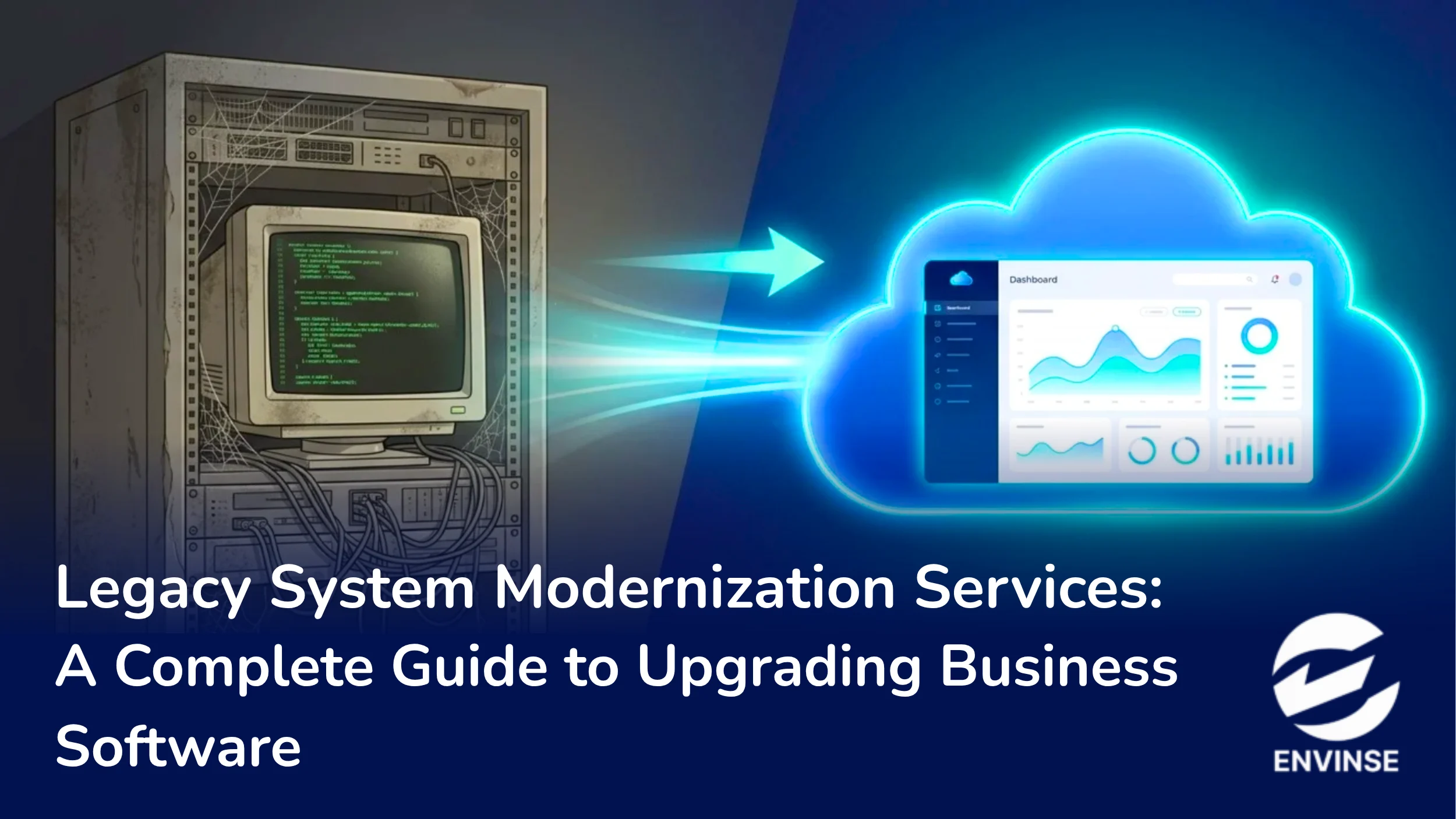
Legacy system modernization is the strategic process of updating, refactoring, or replacing outdated business software to improve scalability, enhance security, and reduce maintenance costs. In 2026, modernizing legacy infrastructure is no longer optional; it is a critical requirement for integrating Artificial Intelligence (AI), maintaining regulatory compliance, and driving business agility.
What is Legacy System Modernization?
At its core, legacy system modernization refers to the process of transforming outdated software, infrastructure, and architectures so they fulfill current business and technical requirements. It is important to note that a legacy system is defined by its opportunity cost and inability to meet business needs, rather than strictly by its age. A three year old application running on an unsupported framework can be considered legacy, while a twenty-year-old system that remains secure and adaptable might not be.
For organizations looking to understand the foundational elements, exploring the Core Concepts of Legacy Modernization is a crucial first step. Modernization typically involves moving away from monolithic architectures toward microservices, migrating to cloud environments, and implementing modern APIs. This evolution ensures that the software can communicate effectively with modern digital ecosystems.
Why Upgrading Business Software is Critical in 2026
Maintaining outdated systems comes with a steep price. Research indicates that organizations spend between 60% and 80% of their IT budgets merely maintaining legacy infrastructure. Furthermore, approximately 44% of Chief Information Officers (CIOs) identify legacy systems as the primary roadblock to business growth.
Here are the primary drivers for modernization in 2026:
- Security and Compliance: Older systems often lack modern security protocols, making them prime targets for cyberattacks and data breaches. As data privacy regulations become stricter globally, running unsupported software is a massive liability.
- AI Readiness: AI driven development and decision making require real time data access and agile architectures. Legacy systems often lack the necessary APIs and data pipelines to support AI integration.
- Cost Reduction: The accumulation of technical debt and "process debt" (inefficiencies in workflows) costs businesses significant time and money. By modernizing, companies can shift their budgets from maintenance to innovation.
- Agility and Scalability: Modern markets demand rapid feature releases. Legacy applications often suffer from limited scalability and poor adaptability. Investing in modern software application development ensures your business can pivot quickly in response to market changes.
- Talent Shortage: Finding developers who are proficient in older programming languages (like COBOL or outdated Java frameworks) is becoming increasingly difficult and expensive.

Navigating complex regulatory environments is costly and prone to human error. AI systems can continuously scan internal communications, financial records, and operational data to ensure compliance with industry regulations. By aligning with established guidelines like the NIST AI Risk Management Framework, organizations can safely deploy AI to automate compliance audits. This significantly reduces legal risks, lowers the cost of manual auditing, and prevents the massive financial penalties associated with regulatory fines
The 7 Rs: Legacy Application Modernization Strategies
There is no one size fits all approach to upgrading business software. Success depends on choosing the right path based on business value, data, and integration needs. The industry standard framework includes seven distinct Legacy application modernization strategies:
- Retain: Keeping the application as is if it still provides value, is stable, and poses low risk. This is often a temporary measure.
- Retire: Decommissioning applications that are no longer needed, thereby reducing the IT footprint and eliminating unnecessary licensing and hosting costs.
- Rehost (Lift and Shift): Moving the application to a modern cloud infrastructure without changing its code. This provides quick infrastructure resilience and reduces on-premises data center costs.
- Replatform (Lift, Tinker, and Shift): Making minor cloud-optimizations to the application before moving it, without changing the core architecture. This might involve migrating to a managed database service.
- Refactor: Restructuring and optimizing existing code to remove technical debt and improve performance without changing external behavior. This makes the application easier to maintain and scale.
- Rearchitect: Materially altering the application’s architecture (e.g., shifting from a monolith to microservices) to exploit cloud native capabilities. This is highly effective for applications that need to scale dynamically.
- Rebuild/Replace: Completely rewriting the application from scratch or replacing it with a modern Software-as-a-Service (SaaS) solution. This is necessary when the existing system is too degraded to salvage
2. Predictive Analytics for Supply Chain and Inventory
Supply chain disruptions cost companies millions annually. Predictive analytics algorithms analyze vast datasets including historical sales data, seasonal trends, macroeconomic indicators, and even real time weather patterns to forecast demand with unprecedented accuracy.
- ROI Impact: Reduces carrying costs by optimizing inventory levels and minimizing warehouse space requirements.
- Business Value: Prevents stockouts and minimizes waste, particularly in manufacturing and retail sectors, ensuring that capital is not tied up in unsold goods.
3. AI Powered ERP Systems and Financial Anomaly Detection
Modern Enterprise Resource Planning (ERP) systems have integrated AI to move beyond mere data storage. In 2026, AI is moving from a dashboard feature to an active participant in ERP workflows, with agentic capabilities automating procurement, finance, and supply chain decisions without manual triggers. If an unusual expense, a duplicate invoice, or a sudden spike in vendor costs appears, the system flags it instantly. This proactive anomaly detection prevents financial leakage before it compounds, ensuring tighter fiscal control, faster month-end closes, and more accurate financial forecasting.
4. Generative AI in Customer Service and Support
Generative AI has revolutionized the contact center, turning it from a cost center into a value driver. Instead of rigid, rule based chatbots that frustrate users, businesses are deploying conversational AI agents that understand context, sentiment, and complex multi-part queries.
- First Contact Resolution: AI handles up to 70% of routine customer inquiries, such as order tracking and basic troubleshooting, instantly.
- Agent Copilots: For complex issues, AI assists human agents by instantly retrieving documentation, summarizing past interactions, and drafting responses. This slashes average handle times and significantly boosts customer satisfaction scores (CSAT).
5. Dynamic Pricing and Revenue Optimization
In highly competitive markets, static pricing leaves money on the table. AI driven dynamic pricing engines continuously analyze competitor pricing, market demand, inventory levels, and consumer behavior to adjust prices in real time. This use case is particularly lucrative in e-commerce, hospitality, and logistics. By finding the optimal price point that maximizes both sales volume and profit margins, businesses consistently deliver a measurable increase in gross margins without sacrificing market share.
6. AI Driven Talent Management and Workforce Upskilling
As highlighted in the World Economic Forum’s Future of Jobs Report, the integration of AI is fundamentally reshaping skill requirements across all industries. Businesses are using AI platforms to map internal skills, predict future talent gaps, and generate personalized learning paths for employees. By optimizing workforce allocation and improving retention through targeted upskilling, HR departments are turning AI into a powerful tool for human capital ROI, reducing the exorbitant costs associated with external hiring and onboarding.
7. Automated Risk Management and Compliance
Navigating complex regulatory environments is costly and prone to human error. AI systems can continuously scan internal communications, financial records, and operational data to ensure compliance with industry regulations. By aligning with established guidelines like the NIST AI Risk Management Framework, organizations can safely deploy AI to automate compliance audits. This significantly reduces legal risks, lowers the cost of manual auditing, and prevents the massive financial penalties associated with regulatory fines
Frequently asked questions
What is legacy system modernization?
Legacy system modernization is the process of updating, transforming, or replacing outdated software, infrastructure, and architectures to meet current business, security, and technological requirements.
Why is legacy modernization important?
It is essential for reducing high maintenance costs, mitigating security vulnerabilities, enabling integration with modern technologies like AI, and improving overall business agility.
What are the 7 Rs of modernization?
The 7 Rs are Retain, Retire, Rehost, Replatform, Refactor, Rearchitect, and Rebuild (or Replace). They represent the different strategic approaches an organization can take when dealing with legacy applications.
How long does a modernization project take?
The timeline varies significantly based on the complexity of the system and the chosen strategy. A simple rehosting might take a few months, while a full rearchitecture can be a multi-year initiative.
What is the difference between rehosting and refactoring?
Rehosting (lift and shift) involves moving an application to a new environment (like the cloud) without changing its code. Refactoring involves optimizing and restructuring the underlying code to improve performance and maintainability without changing the application’s external behavior.